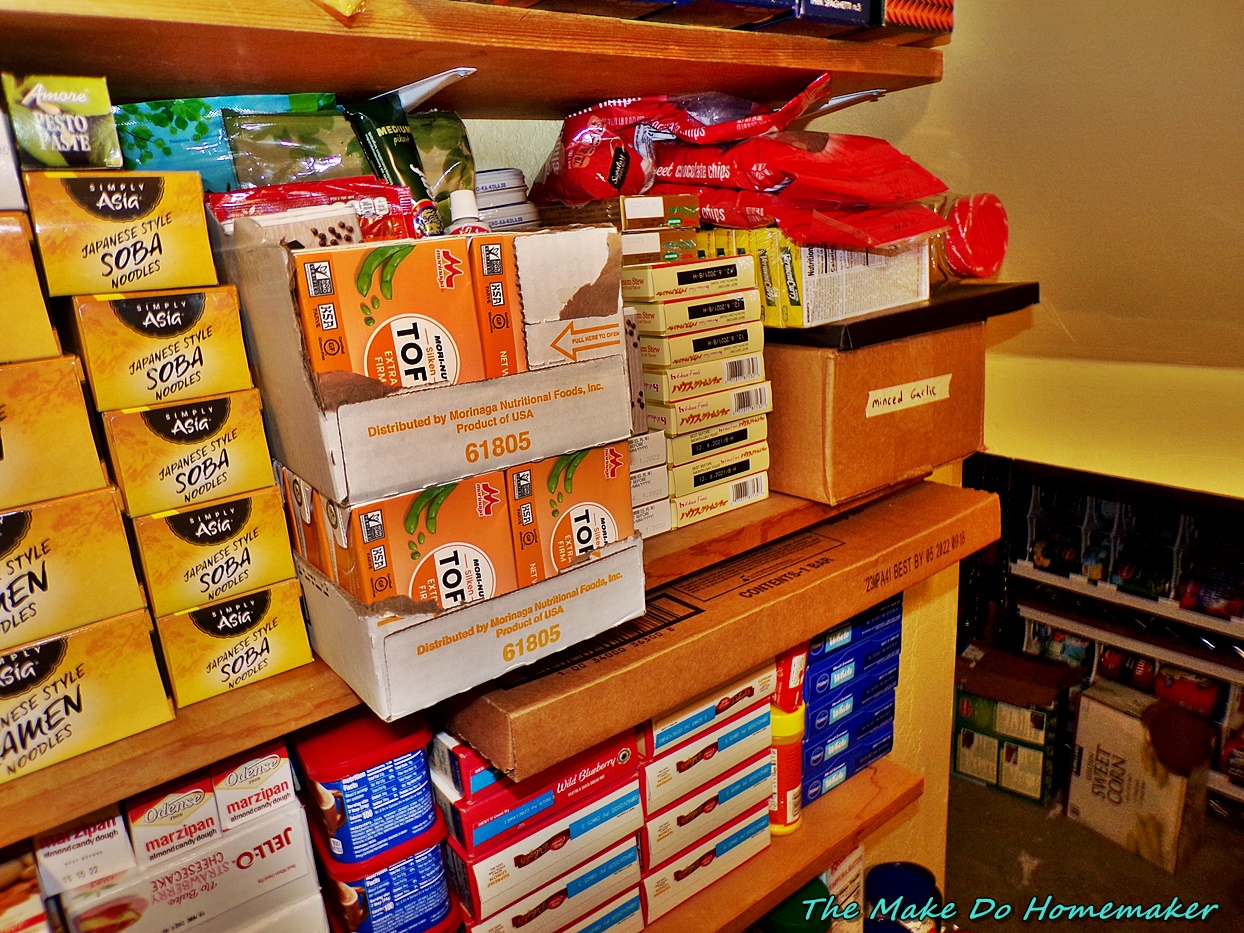
I know that this blog post is a long time in coming and that
I may already be too late in sharing these items with you. But, I am hopeful that those who are looking
for a list of items to buy at the store to get started with food storage…well I
am praying this might help just a bit. Just
to warn you: This post is going to be
long (and I’m not kidding) and I’m just scraping the surface here…I have other things
I’ve decided to put into other blog posts, so yeah…this might be a novel when
it is all said and done. Just stick with
me.
Practical experience-wise from a perspective of someone who
has lived off of her food storage more than a few times throughout the years, these
are the brass tacks I was able to get down to and I’m sure I’m forgetting
things.

1. Fruits and
Vegetables.
Get yourself some canned fruit or vegetables. Yes, frozen tastes better and fresh is always
best (and hey, get some of those if you can afford it too), but a flat of cans
will last you indefinitely if they are in good shape and it will give you some
nutrients in your diet from fruits or vegetables when fresh or frozen aren’t
around. When using canned vegetables or
fruit, try to heat up the vegetables in the liquid that is in their can. During canning nutrients leach into the
liquid in the can, so don’t waste the nutrition there! I used to take the liquid from a can of
vegetables and use it to make up some instant mashed potatoes or other dish so
that I didn’t waste the liquid. If you
are worried about salt in vegetables and sugar in fruit go for low sodium or no
salt added vegetables and go for fruit canned in juice instead of syrup. I use the juice from the canned fruit to flavor
glasses of water for dinner or I add it to some iced tea to give it a new
flavor.
For my family the bare minimum for vegetables and fruit
always seems to boil down to canned green beans and canned peaches. Those are the two we go to the most. When you are really broke monotony is your
friend when it comes to keeping costs down on getting food storage going. I’d love to recommend you get every canned
vegetable or fruit under the rainbow for variety’s sake, but start small. Aim small and miss small as they say. Calculate how often you eat your favorite fruit
and veggie per week and than multiply that number by the amount of weeks in a
year. You may not get that much stocked
up if your budget is really tight, but get what you can afford each week and
aim for that target of getting enough for a year. At this point, with the way costs are going, anything
you stock up will be something that you have stocked up on that has beat
inflation by a bit.
Also, be sure to get yourself canned tomato sauce and tomato
products. I know a lot of people like to
make their own sauce with whole canned specialty tomatoes and things, so keep
that in mind when you stock up. Myself,
I go for the Hunt’s Pasta sauces…they come in 28 oz cans and up here are going
for around 2.89 a can (they have gone up in price along with everything
else). I keep a variety of pasta sauces
around the house since pasta is one of our staple foods and definitely stock up
on tomato sauce. I keep diced tomatoes
around for chili, I keep whole tomatoes around for well…everything really that
you might need to make with canned tomatoes as you can dice them, crush them,
etc. I also keep tubes of tomato paste
around versus cans as I like being able to use what I need from a tube and
putting it back into my fridge instead of having to freeze what is left over
from a can only to have it get lost for years in my freezer (true story there).
2. Canned meat.
Do I recommend canning your own? Sure, if you have the materials and can get a
good deal on meats at the store and have the time to do it. Do I recommend learning to can right now and
starting to can your own stuff? Man,
that’s a hard one. It would depend on
materials, your budget and availability of those materials in your area. My area?
I haven’t been able to find a good supply of canning lids in years, jars
are darned near impossible to find in stock and if you buy from the used store
you might find them here and there, but they sure aren’t as common as they used
to be. And if you want to can meat you need a pressure canner and those are
REALLY hard to find right now and they have gotten more expensive. There’s
a lot of things to consider there. If you
are planning on putting up your garden this year and have limited freezer space,
though, you might want to try and get the materials throughout the growing
season so you have them for harvesting season in the fall and be sure to get
yourself the Ball Complete Book of Home Preserving…best book out there and a
lot of good recipes. Best advice I can
give there.
I am going to assume that you don’t have the money and time
to invest is learning to can right now for this post. So taking those things into consideration, I’m
going to stick with canned meat for now that you purchase. If you have the money, I’d suggest buying in
bulk. At a minimum I would suggest
getting canned chicken as I found it to be the most versatile. I get flats of 12 to 24 cans (5 oz…tuna fish
sized cans). You can usually get the
Hormel brand chicken for a flat of 12 cans for about 15 or so dollars (right
now…be aware prices are going up fast). I use the canned chicken in a lot of
recipes. Anything that you shred
chicken, cut chicken, etc. canned chicken can be subbed in for. I’ve
made everything from chicken salad to casseroles, soups, pasta dishes, you name
it. Canned tuna is another option if you
prefer tuna. But, to me, it is important
to have canned meat available should fresh meat be too expensive to afford (or,
in the case of chicken, quickly becoming harder and harder to find with the avian
flu ripping through the chicken farms all over).
And yes, I realize that not everyone out there eats meat, so
don’t consider this advice geared toward yourself (obviously).
3. Rice/Beans/Lentils
At a bare minimum I would suggest stocking up on rice. It is the most calorically dense grain there is and will go the farthest. If you have an
electric pressure cooker it usually has a setting you can make rice with, or
you can make it on your stove top (or, if you are me, you have a rice cooker that
you love). You can make rice into porridge,
rice pudding (dessert) and other things as well. Rice also keeps its nutritional value a LONG
time. The Mormon church has done tests
on rice that are so old that the rice changes color and tastes awful, but the nutritional
content is still there and perfectly safe to eat.
I would also suggest getting dried beans. There are quick cooking methods for beans if
you don’t find the time to do the soaking and cooking method. I like to make a big batch in a slow cooker
and then freeze them or I home can some to use later. But, if you combine beans with rice you will
have a complete protein, which will keep you going when nothing else will. If you don’t eat beans regularly and find
that they give you an upset stomach, SLOWLY incorporate beans into your diet by
like adding some homemade refried beans to your taco meat or adding a few beans
to your soups and things. Beans are something,
I’ve found, that takes your body getting used to so you can eat them without
your stomach protesting its lot in life (I also have a stomach condition that I
have to tip toe around, so that’s part of my issues). Don’t think you can suddenly eat beans every
day and not suffer until your body gets used to the idea. Trust me.
You have to get used to it. If
beans take too long to cook for you, get some lentils instead as they cook a
lot faster (although check out making beans in your electric pressure cooker…it
is way quicker than the old, cook them all day, method). I personally have black beans, Great Northern
Beans and pinto beans in my stores as well as some home canned adzuki beans and
some lentils and most of those are from people giving me a bunch of bulk beans
they didn’t use up.

4. Wheat/Flour
If you eat wheat based products, I would suggest stocking up
on bread and all purpose flour (if you can only afford one go with all purpose
as there are bread recipes, including my never fail bread that call for all
purpose flour). If you don’t eat much at
a time go for bleached, not unbleached flour as the more bran in the flour the
quicker it will go bad on you. I store
my flours in five gallon buckets with airtight lids and keep the in a cool dark
area in my pantry. They have survived
there just fine. Even for my family of four
and me baking bread weekly now, a 50 lb bag of bread flour will still last me
about 8 months. I’ve been supplementing
with home ground wheat flour of late because I’ve been given a lot of whole
wheat berries over the years and we figure now is a good time to get in the
habit of using them. Do I suggest going
down to your local Mormon cannery and getting some bulk whole wheat and
grinding flour yourself? Not unless you
have a grain mill at home or something that can grind the wheat for you. Wheat grinders are expensive for the electric
ones (if you can find them right now) and while there are hand crank ones you can
find on Amazon and such, I can’t say that I can recommend one in particular.
Also, having personally ground wheat by hand the last couple
of months, you better have a lot of time to commit to grinding wheat for your
bread and other baked goods if you have a hand grinder as it takes quite a
while to get a couple of cups of flour to use.
You can use a coffee grinder to grind wheat, but be careful as I’ve
actually burned up a coffee grinder trying to do that. If you do decide to get a wheat grinder and
grind the wheat to use, be sure to have a series of flour sifters for flour so
that you can sift out some of the bran from the flour to use it for different
things. You CAN keep all the bran in the
flour, but it will make a really dense final product to the breads you bake, so
if you do that I’d suggest mixing the whole wheat flour into store bought bread
flour about a cup at a time in your bread recipe until you get the consistency
in your baked goods that you like. Right
now, I sift my flour through a couple of different sifters and I still am
mixing my flour a ratio of 1 ½ cups of home ground flour to 3 ¾ cups of regular
bread flour to bake two loaves of bread (I have finer sifters, but this works
for me at the moment). This will help to
extend the life of your bread flour if you bake bread a lot. And don’t throw your wheat bran away. You can use that to make different things as
well, including gluten to use as a meat substitute in recipes, should it come
to that (I store left over bran in my freezer).
If you have never baked bread before but are still worried
about the rising costs of wheat products (some are saying that bread might go
up to 20.00 a loaf by the end of the year), I will try and put up a tutorial on
how to make bread, but in the meantime (especially if you are pressed for time)
I’d suggest going to your local thrift stores and looking for a bread
maker. Don’t worry if it doesn’t come
with a manual as you can look those up online in 99% of the cases. The bread maker directions will give you
basic recipes to make and will break down the order to put your ingredients
into the bread maker. A lot of the newer
ones even have a timer on them so you can bake fresh bread in the morning for
yourself to enjoy before going to work. If
you have 70 to 100.00 to plunk down on a new bread maker, that is definitely
preferable as you know it is new and SHOULD work, but I know the bread makers
at my local thrift stores go for about 10.00 (some you can find as low as 5.00
if you keep looking), which is a lot more affordable. A note of caution with a bread maker from a
thrift store, though, is to look for one that looks new or close to new. The older ones, you don’t know how long they have
been sitting there, how hard they were used, if the pan fits in the bread maker
(I ran into that once) and if the bread maker works. A lot of thrift stores here will give you a
return window on electronics that don’t work and you’ll get store credit when
you return them, but I know I would rather just get a electronic device that
works and doesn’t need to be returned and have me wasting money. So, just be cautious.
5. Sugar and Salt.
Yes, I consider both sugar and salt to be important. Both can be used to preserve foods. Sugar can be used as a way to preserve fruit
and is also important if you are going to bake things like cookies. Sugar even assists in baking bread. So, yes, I consider it to be a staple
ingredient to keep in the house. I buy 25
to 50 lbs at a time and keep them in heavy plastic containers (like a five
gallon bucket with a gamma lid) to keep them safe from bugs and rodents. I also keep about 4 lbs of both powdered sugar and brown sugar around in my food storage so I have it when I need it, but I don't use them tons, so I don't keep a lot of either of them around.
Salt is another staple item.
I am going to be the minority out there of people (so it seems) that are
calling for everyone to only buy pink salt or Redmond Real Salt as those are
the only “real” salts that they will buy.
Look, if your budget is tight and you don’t care? Buy table salt for cheap. Stockpile enough that you can use it, not
only for salt for cooking and baking but also buy enough to use in pickling
your foods, or if you really want to be prepared, get enough to use to salt
meat if needed later on. I know that the
bulk stores like Costco sell 25 lb bags of salt and they really weren’t that
expensive the last time I saw them (which, admittedly has been a while). Think of it this way with salt. Say you go overboard and are stuck with tons
of salt. It is a rock. It doesn’t go bad on you. If you end up sitting on salt for a while, is
it really a crisis to you? I bought a 25
lb bag of salt years ago and still have a bit of it left that I’m slowly
working through. I’ve used it to kill
slugs, salt food, bake bread and other baked goods, pickling (the books will tell
you to only use non iodized salt to can with so you might want to get some
plain salt and put it aside for that) and even to salt my driveway when we ran
out of ice melt one nasty winter. It is
a really versatile thing to keep around the house and definitely a fundamental item
to keep as far as I’m concerned.
6. Leavening Agents (Yeast,
baking powder and baking soda)
Leavening agents are a must.
Some are more versatile than others.
Yeast. ALWAYS
and I mean ALWAYS store your yeast in the freezer. It will keep your yeast fresh for years. I buy a couple of pounds at a time (like I
said before, I bake a lot of bread) and the one that I open I empty (nearly)
into a quart sized mason jar and keep it on the door of my freezer for easy
access. I always end up with a little
baggie of yeast left over that doesn’t fit in the quart jar, but that is easily
put beside the jar so that I don’t lose it in the freezer. I highly, and I mean highly, recommend SAF
instant yeast as my yeast of choice. I
buy it two pounds at a time from Amazon right now as my local deli where I was
buying it stopped carrying it the last time I went in. They come in vacuum sealed bricks, so if you
put those in the freezer they’ll keep for a good long time and yes, I put them
in the freezer as soon as I get them…I don’t care about the two year use by
date on them…I’d prefer to stick them in the freezer as quickly as possible to
put those little yeasties into suspended animation without worrying about heat
getting to them and making them go bad on me.
I store my unopened yeast down in my standing freezer on the door so
that I can keep good inventory of how much yeast I have at any given time.
Baking soda. Baking
soda is one of the most wonderful things you can keep the house. You can use it for cleaning, for helping to
bleach your laundry, to make single acting baking powder (with some help of
cream of tartar) , to brush your teeth (if you can’t get ahold of toothpaste),
to make your own deodorant…there’s tons of uses for it. You can even bake it to make washing soda
(for those in other countries who can’t readily get ahold of it, that might be
a good tip). So, when I buy baking soda,
I try to fid it in the big bags that you can get at the bulk stores or you can
try places like Home Depot and Lowes for them as well. Definitely something to keep in bulk.
Baking powder. Baking
powder is definitely a leavening agent that you should buy sparingly. It only has a life span of about two years
and then it starts to decrease in effectiveness. Ever gone to make some baked good and it turns
out dense and hard? That’s probably
why. Your baking powder died. As far as I can find there really isn’t a way
to extend the life of baking powder. Vacuum
sealing it or freezing it doesn’t seem to make a difference as it depends on a
chemical reaction within the baking powder itself to work. So, at most I buy one or two containers and
keep cream of tartar and baking soda around as a back-up in case I can’t find
baking powder at the stores.
7. Fats and oils.
This is a tough one, but it is definitely something we want
to try and stock up on as fats and oils are getting harder and harder to come by
with global supply shortages and crop failures.
And they are skyrocketing in price.
And, unfortunately, oils are something you need to bake (you can sub in
different fruit and veggie purees and things, but I prefer to eat the applesauce
instead of using it in baked goods if I can help it) or if you want to fry
foods, so it is something I consider a staple to keep around in my household.
So, how do you preserve oils for long term storage without
them going rancid on you (and they will go rancid on you if you don’t use them
fast enough)? Well, just about any fat
can be frozen. I’ve stored lard in my
freezer in its original container for YEARS.
I just chisel off what I need for the project I need it for and just let
that set amount come to room temperature before I use it. Same with tallow. Olive oil and other liquid oils can be frozen
(things like vegetable oil won’t freeze solid but will be preserved by the freezing
temps all the same) to extend their shelf life for at least two years. You can also place oils in the fridge and
they’ll keep for at least a year without worries of them going rancid. I actually go through quite a bit of oil
around here, so I do keep my liquid oils in my pantry (a cool and dark place),
but things like lard and tallow I’ll put in my freezer since I don’t use them
as often. Crisco I’ve started buying in
small containers as I find it will go bad on me in larger quantities long
before I use it and I just keep it cool and dark (in hot weather I transfer the
small container to the fridge to keep it nice and cold) and it seems go keep
for quite a while.
And butter? Forget about
it. Just place it in your freezer in the
original boxes and it freezes wonderfully.
I have stored butter for years in my freezer and never had a problem
with the texture or any of its properties when it defrosts. So, definitely stock up and freeze butter if
you have the opportunity. I am still
running into decent sales on butter up here (limits are in effect, of course,
on the sale item, but let’s face facts.
If you are on a budget, you can afford to pick up two pounds of butter
for 2.49 a pop, but there is NO WAY you’d want to pick up like ten in a week or
you’d be broke, so limits aren’t a horrible thing), so hopefully you have time
to get some before it becomes really expensive and hard to come by.
Coconut oil, if kept clean (always scoop out with a clean
spoon) will last for years if you just keep it in a cool and dark
location. I don’t cook with coconut oil,
but I keep it around for making skin care products and lip balm. If things get hard to come by, this is one I’d
suggest getting at least a container of it to keep around so you can make the
things you need for daily comfort.
I regularly store canola oil and olive oil for my liquid
oils. I don’t want to go overboard with these
as I only have so much fridge and freezer space (like everyone) and don’t want
to scramble to figure out how to keep them from going bad on me if the
temperature starts to go up, but I am trying desperately to keep ahead on them
so that I don’t run out anytime soon.
8. Milk.
I keep various types of this staple in my house, but you don’t
need to keep all of these around. One of
my son’s staple “real” foods he’ll actually consume is whole milk, so we try
desperately to have different ways to keep it in the house.
Dehydrated milk. I
use this regularly in my baked bread to give the bread a softer crumb and will
definitely use it in cooking and baking when milk gets hard to come by at the
store. If you don’t use a lot of milk, try
to avoid buying #10 cans (big coffee can size) of dehydrated milk. You have to use the milk within a year of
opening or it will start to go rancid on you and a #10 can gives you a lot of
milk to go through. I have heard you can
freeze milk powder to keep it fresh, you could do that, but be sure not to lose
track of it in the freezer. At the time
I’m making this post, Augason Farms #10 can of milk on Amazon is only going for
$16.78, which is a really good price for that.
I actually bought six packs of Carnation milk on Amazon last year, which
I love the smaller sized cans, but that isn’t available right now (and hasn’t
been for quite a while), so yeah, do some exploring to find what fits you best.
Evaporated milk. Great
to use as a substitute for half and half or cream in baking recipes in a pinch
(I use it in a particular scone recipe I make that calls for cream when I make
it occasionally). If times get really
bad people can also use evaporated milk to make their own formula for babies (I
will let people do their own research on that), so I try to keep some extra
around not only for my family but to donate to the food bank if things get
really bad.
Condensed milk.
Sweetened condensed milk is an item that I’ve found more and more uses
for over the years. I’ll have to share
some of them. But, I do consider this a
staple to keep in my food storage and usually aim to keep at least six cans to
use in different desserts.
UHT/Boxed/Shelf Stable Milk.
I have become quite the connoisseur of UHT milk over the last few years
as we bought a bunch pre-lockdown I’ve had to use up. This doesn’t have the long use by dates that
the other types of milk do, but I have found it keeps longer than the use by
date by quite a bit. I used up all of my
older UHT milk to make home made yogurt (yogurt is another wonderful thing to
keep around as it works as a substitute for sour cream and other things…I’ll do
a post on that later on) and recently used one of our newer boxes this week
when I was trying to avoid going to the store until Friday so I was trying to
keep the fresh milk around for the son to drink. So, I used the boxed milk to make soup
instead of fresh milk. Great stuff to keep around.
9. Powdered and frozen
eggs.
This is one that I suggest keeping around for the sake of
necessity. With the avian flu ripping
across the globe, eggs are going straight up in price and may very well be hard
to come by everywhere here soon, having longer term storage solutions seems to be a good idea. So, I
bought myself a #10 can of powdered eggs when I first heard of the avian flu
break out months and months ago. This
was bought to use in baking.
I have
also, when fresh eggs start to get a bit old in my fridge, been scrambling one
egg at a time lightly and then freezing them in reusable muffin liners in
muffin pans (the reusable liners make the eggs easy to remove once frozen and
saves your poor muffin tin from getting damaged as you try and chisel them out
of the muffin tin). I then bag the eggs in
a freezer bag (I just add eggs as I freeze different batches to the same
bag). Once I get enough I’ll vacuum seal
the eggs in a bag to use for scrambled eggs when things get scarce or to use in
baking as well. I wouldn’t suggest going
out and buying a ton of powdered eggs as one #10 can of eggs is actually a
decent amount of eggs. When I open my
can I am planning to separate it out into different portions and then vacuum sealing
the eggs into mason jars so that I don’t have to try and blow through a can of
eggs within a year. Since I don’t have a
freeze dryer this is the best options available to me, so do what is best for
you.
10. Potatoes.
Potatoes are a great, calorie dense, food to keep
around. You can feed a lot of people
with potatoes (as my Irish ancestors would attest).
I like to keep a good supply of fresh potatoes
in potato bags in my fridge. Yes, I know
that they say not to do that as it is too cold, but I’ve found my pantry is just
warm enough that the potatoes immediately sprout, so my fridge now has a potato
drawer. It is a great use for the old “vegetable
rotter” as my mom used to call the crisper drawer.
I do not like instant mashed potatoes for the
most part, but I do keep them around as they work great for things that don’t include
making mashed potatoes. And let’s face
facts, some mashed potatoes with meatloaf, instant or not, is better than no
mashed potatoes. But, instant mashed
potatoes can also be used as a thickener for soups and stews, can be used a
filler instead of bread crumbs in things like meatloaf and other things. I actually have quite a store of dehydrated
potato products in my long term food storage.
Shredded potatoes, potato slices, potato dices…you name it. #10 cans of dehydrated potato products were
going for about 8.00 a pop a few years ago, so I grabbed some here and there
for long term food storage. Amazon still
has them, but the potato slices that I found are now 16.00 and something for
the Augason Farms brand, so you might want to check around if you want to do
that option. Potato flakes are still
readily available and should have a use by date of at least a year or two out
from when you purchase, so I’d definitely consider this to be a good thing to
have around.
11. Pasta.
This is another thing that I definitely keep in bulk around
my house. Pasta is great. Keep it dry and safe from bugs (store pasta
that comes in boxes like Barilla in plastic containers to keep it safe from
weevils and things) and it’ll keep indefinitely. Also be sure to secure it from mice as rodents
are determined little buggers.
I keep different shapes of pasta in my food storage for
different uses. At a minimum I am always
sure to stock up on spaghetti as that is usually the cheapest one you can get
and also still comes in a 1 lb package versus 12 oz (at least the last time I
checked it did, but watch for shrinkflation).
Pasta is also one of those things that you can pick up a few boxes every
week and it will quickly add up for you, so I definitely suggest adding this to
your pantry essentials. I keep enough
around to feed us for at least a year (figuring on eating pasta at least once a
week), but have had to double that in the last few months as my son is inhaling food like a Hoover and
will go through a pound of pasta by himself within a day…I might even have to
buy more to be safe the way he is going.
12. Seasonings.
This is a big one. If you have a certain type of grill seasoning
that you like, see if you can buy it in bulk and pick up a big container of
it. Salt and pepper go decently far, but
spices and seasonings really make life a lot less hard to live through.
I have a big spice cabinet that I’ve built back
up since 2018 (with help from others in the beginning, thank you all!) when we
had an earthquake that wiped out my spice cabinet (along with a ton of other stuff
in my house) and I rotate things out regularly.
If you don’t really have a spice cabinet and know you are going to have
to start cooking soon with the way prices are going up on take out, the bare
minimum of things I’d suggest is getting a grill seasoning you like (I always
have McCormick’s Montreal Steak Seasoning on board), salt and pepper, an Italian
herb blend (it will have a bunch of herbs in it so you won’t have to buy them
all individually), lemon pepper (a wonderful asset to have for fish
or when you need a citrus note), seasoning salt (I really like Morton Season
All, but haven’t been able to find it in a long time, so I got a store generic
that is okay right now), garlic and onion powder, taco seasoning and chili powder (so
you can make chili, of course).
Paprika
might be a good one to invest in as well as you can use that as part of a base
to make your own seasoning blends and one that a lot of people don't think of is cumin, which is a big one when it comes to making seasoning blends like chili powder and taco seasoning. With
spices, I’d suggest getting cinnamon, at least, vanilla extract (I have imitation
vanilla and it works fine) and anything you find you reach for regularly. For me, I make sure to have an extra
container of ground ginger in the house as I have a cookie recipe for my son
that calls for a lot of ground ginger in it, so I know I’ll need it.
13. Condiments and vinegars.
Ketchup,
mustard, relish, pickles. Be sure you
get as much as you need to last you a while on those staples you use all the time. We go through a lot of ketchup, so I make
sure to be stocked up on that. Soy sauce is one that if you like to make Asian food, you will want to stock up on that. I also store miso paste in my freezer as I like to cook Japanese food decently often and I store shelf stable tofu for the same reason. Salad dressings. Think of what you really want to have should things become unavailable and stock up a few extra of those items. I'm not saying go and buy 12 bottles of salad dressing when you normally go through like one or two a year. Try to be realistic about what you'll use and go from there.
Vinegars
are usually in this category, but I nearly put them by themselves. I keep gallons of white vinegar around (you
can use it for making salad dressings, making pickles and also for various cleaning
duties) for canning pickles and making quick sauerkraut brine. I usually keep a gallon of apple cider
vinegar for pickling purposes and I recently got a gallon of rice vinegar
because I needed rice vinegar for a recipe and it was cheaper to buy the gallon
than it was to buy a smaller container (the weirdness of internet shopping) and
I’ve been using it anytime an Asian recipe calls for vinegar (it’s worked so
far as just brining pork for sweet and sour pork calls for a decent amount of
vinegar in it *laugh*). I usually keep a
small thing of balsamic vinegar around for salads as well during the summer months.
If you can only afford one vinegar, though, I’d
go for white distilled vinegar. It is
the most versatile and can be used for food purposes as well as cleaning
purposes.
14. Stocks/Bullion.
I
stock up on powdered bullion instead of boxed stocks around here. I find the Mexican Knorr brand to be the best
and I stocked up in bulk on the beef and chicken flavors over a year ago. They will last me for quite a while and I
find they have the best flavor (and don’t’ taste overly salty) of all the
brands I’ve tried.
I know a lot of
people make their own stocks and can them themselves (which good for you if you
do!), but I have a small pantry and limited amounts of mason jars to
spare. I do, from time to time, make some pints of stock to add to soups and stews later (like I turn the turkey carcass from Thanksgiving into stock), but for the most part I turn to powdered to save space and time. So, for Erika, powdered stocks
are just fine by me. Stocks and bullion
are essential to have around to use for bases for soups and stews, to add depth
of flavor to dishes and sauces and things.
So, yes, I consider these to be a big one for me to have on my “don’t
run out” list.
15. Chocolate and cocoa powder.
I know some people who don't stock up on chocolate items, which is fine, but for my family with a deadly peanut allergy in the house (who also happens to love chocolate), I try to stock up a year at a time on things like chocolate chips.
Cocoa powder is another one that is great to stock up on as it is one of those items that will keep indefinitely and will come in handy when you want to make brownies, chocolate cake or other chocolate recipes.

16. Satellite Items/Other Stuff
These are things I keep in my home that, while
you can live without them, are good to have in your stockpile.
One is honey.
Honey does not go bad. It will
crystalize over time, but it doesn’t go bad.
So, it is a great thing to keep around as a sugar alternative in baking
(you can even use it to make jams and things with if you get the right
pectin). But, I'll be the first to admit that honey can be pricey to have around. So, use your own judgement on this one. If you are into canning and have the supplies available you can make dandelion jelly or parsley jelly and they come out tasting a lot like honey, so that is an option if you really can't afford to buy honey regularly to top your corn bread or yogurt.
Maple syrup is one that I keep
on hand because when my son sometimes eats pancakes, he will only eat real maple
syrup on them, so it is an investment I’m willing to make.
Molasses is a good one to keep around to make
gingerbread, to serve on top of oatmeal and other things, so I do keep that
around the house as well.
Coffee. Okay, not necessary for survival, but my husband and I still like to drink it. So, we keep that in our stores.
Juices and Drinks: I try to keep a good stock of powdered drinks in food storage so that we are sure to at least get a good dose of vitamin C from somewhere. I keep lemonade mix, Tang and a few different flavors of Gatorade powder in the house if at all possible to give us a bit of variety in what we can drink and also for the sake of the ever important Vitamin C.
Cornmeal/Polenta are staples in my house to make cornbread and other
things with (I’ve got some plans on recipes to share coming up, so stay tuned),
but you can also just buy Jiffy cornbread mixes to last you and call it good.
Prepackaged items also have places in my house. I buy and stock Jello puddings in various flavors (or Royal puddings in some cases) that I can quickly mix up for a fast dessert. I also stock up on things like cake mixes,
muffin mixes and other foods that while they have a life span on them, help me
to not have to do things like bake a cake from scratch (not something I’m very
good at) and use up materials and I keep those in my short-term pantry and rotate
them out regularly. I also have some prepackaged rice mixes and potato dishes that we like. I know it is not a strict survival thing, but it is nice to have. Same thing with boxed macaroni and cheese. Not a favorite of mine, but my daughter loves it, so I keep it around for a quick go-to lunch or if we just want to throw some chili into macaroni and cheese and call it good for dinner one night.
Nuts/Nut Butters: These items are great to have in your food storage, but can be pricey to buy, so I put them here. I know peanut butter is filling and cheap, but I don't know how cheap anymore as I haven't bought any in over a decade (you know, peanut allergy). I keep peanut safe cashew butter in my stores, powdered Barney butter (peanut safe almond butter products) as well as Biscoff cookie butter for baking some decadent treats (or to eat with a spoon when you are having a down day...maybe...not that I would know anything about that *laugh*). I also store bulk amounts of peanut safe tree nuts. Right now I have almonds, walnuts and pecans in my freezer to use in baked goods. None of these items were cheap for me to buy, but I like to have them around for use in nut butter sandwiches or in baking and in salads (in the case of the whole nuts). But, I did want to mention them here. I don't really consider these a major need to keep in our food storage (I know, I'm weird like that), but I do like to keep them around in multiples for the sake of having them when I want them. When you have a peanut allergy, you can't really go down to the store and just buy nuts (even if they are available) so I have to plan ahead doubly for these types of items.
So, there you go. My
choices for pantry essentials. I know it
is a lot, and believe me I tried to keep the list down, but when you are
looking at having to make things from scratch it really is hard to start to
narrow things down. Making things from
scratch takes a bunch of ingredients, time and money, no matter how you work
it, so it is hard to try and narrow it down to keep it cheap for folks. But, I do consider your pantry and food
storage to be the BEST investment you can make in life in any time, good or
bad, as you just never know what is going to happen from one month to the next,
let alone looking at all of the bad coming the world’s way very quickly
here. I apologize if I forgot and or spaced things or if this post was too long and overwhelming. I've been working hard on this post for about a month now and finally decided I really just needed to post it so it might still be able to do some people some good.
Do the best you can for you and
your family and may God guide us all in the coming storm to land us all on safe
shores.